Direct Air Capture Explained: How DAC Works and Scales
Direct air capture removes CO2 from ambient air. How it works, what it costs, the energy it needs, and what it takes to scale.
Callum Russell
· 6 min read
 Fig. 1
Direct Air Capture (DAC) is a cutting-edge technology that removes carbon dioxide (CO₂) directly from the atmosphere. Unlike traditional carbon capture, which targets concentrated emissions at point sources like power plants, DAC addresses the diffuse challenge of atmospheric CO₂, removing what is already dispersed globally. The captured CO₂ can be stored permanently underground or repurposed as a valuable feedstock for industrial processes.
As the world moves toward net-zero targets, DAC is increasingly recognised as an essential tool for balancing residual emissions, especially those that are difficult or impossible to eliminate at the source.
Why Direct Air Capture Matters
The Intergovernmental Panel on Climate Change (IPCC) underscores that carbon dioxide removal (CDR) technologies are not optional; they are necessary complements to deep emissions reductions. DAC, as a subset of CDR, offers a measurable, durable, and scalable pathway to atmospheric CO₂ removal, particularly when paired with geological storage. As global emissions plateau and hard-to-abate sectors persist, DAC’s role will only become more critical.
 Fig. 2
The Physics & Energy Challenge
Atmospheric CO₂ is present at about 420 parts per million (ppm); a remarkably low concentration compared to industrial flue gases. Thermodynamically, the minimum work required to separate and concentrate CO₂ from air is about 20 kJ per mole, or roughly 0.5 GJ per tonne.
However, practical systems require multiple times this minimum due to the need to move massive air volumes, selectively bind CO₂, and then regenerate and compress it for storage or use. This “entropy penalty” is the fundamental challenge of DAC and explains its higher energy demand relative to other capture methods.
Despite rising CO₂ levels, atmospheric concentrations are still highly dilute. This makes DAC inherently more energy-intensive than capturing at source, but also highlights its unique value: it can address emissions that have already been released and are otherwise unmanageable.
Solid Sorbents (S-DAC)
Solid sorbent systems use porous materials, often functionalised with amines or similar chemistries, to selectively capture CO₂ at ambient temperatures. Regeneration typically involves heating (80–120°C) and, in many designs, applying a vacuum (temperature-vacuum swing adsorption, TVSA).
Companies like Climeworks have commercialised modular S-DAC units, demonstrating real-world scalability and operational flexibility.
Liquid Sorbents (L-DAC)
Liquid-based systems use aqueous alkaline solutions (e.g., potassium or sodium hydroxide) to absorb CO₂. The absorbed CO₂ is then released in a downstream step, commonly via calcium looping and high-temperature calcination (800–900°C), to yield a purified CO₂ stream.
Carbon Engineering’s process is the best-known example, and it is being deployed at scale with backing from major industry partners.
 Fig. 3
Next-Generation Technologies
Several innovative DAC pathways are advancing from laboratory to pilot scale. These include:
- Moisture-swing ion-exchange resins: Capture and release CO₂ by cycling humidity.
- Electro-swing adsorption: Use of electrically charged surfaces to bind and release CO₂ with high precision.
- Zeolites and metal-organic frameworks: Highly tunable materials for selective adsorption.
- Mineral looping: Passive uptake of CO₂ using engineered minerals or industrial byproducts.
Start-ups like Carbon Capture 4 Everyone are pioneering electrochemical liquid sorbent systems that aim to dramatically lower energy requirements. By releasing CO₂ electrochemically, these systems could achieve near carbon-neutral operation and be accessible for decentralized or small-scale applications.
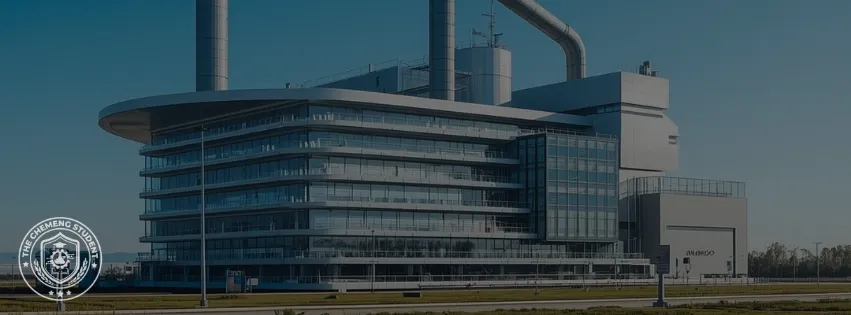 Fig. 4
Inside a DAC Plant: Process Breakdown
A typical DAC facility comprises four major steps:
- Air Contactor: High-volume fans draw ambient air across a capture medium (solid or liquid). The design of the contactor, its geometry, packing, and flow paths, affects both capture efficiency and energy consumption.
- Regeneration: The capture medium is treated (heated, depressurised, or electrically activated) to release concentrated CO₂. This is the most energy-intensive phase and a focus for ongoing innovation.
- Conditioning and Compression: The CO₂ is dried, purified (to ≥95% concentration), and compressed to pipeline pressures (~15 MPa) for transport.
- Transport and Storage or Utilisation: The final product can be injected into deep geological formations for permanent storage, or used as a feedstock for fuels, chemicals, or building materials. Only pathways that result in durable storage count as genuine removals under climate accounting frameworks.
 Fig. 5
The Economics of Direct Air Capture
The cost of DAC remains one of the most significant barriers to widespread adoption. As of today, capturing a tonne of CO₂ from the air ranges from $600 to $1,200, depending on the technology and project scale. These costs are driven by high energy requirements, capital expenses for plant construction, maintenance, and the complexity of CO₂ handling and storage.
However, costs are expected to fall as the industry matures. Key factors influencing future economics include:
- Technology learning curves: As more plants are built, manufacturing and operational efficiencies will drive down costs.
- Energy prices: Access to abundant, low-cost, low-carbon energy is essential for economic viability.
- Policy incentives: Carbon pricing, tax credits, and government procurement programs can bridge the gap until market-driven demand grows.
- Scale: Larger plants and supply chain development will reduce per-tonne costs through economies of scale.
Ultimately, the economic competitiveness of DAC will depend on both technological innovation and supportive policy frameworks.
DAC vs. Nature-Based CO2 Removal
Nature-based carbon removal solutions, such as afforestation, reforestation, and soil carbon sequestration, have been used for decades to draw down atmospheric CO₂. While these approaches are cost-effective and provide valuable co-benefits (biodiversity, water regulation, soil health), they face challenges related to permanence, scalability, and verification.
Key differences between DAC and nature-based solutions:
- Permanence: DAC paired with geological storage offers durable, measurable removal; nature-based sinks are vulnerable to reversal (e.g., wildfires, disease).
- Scalability: DAC can, in principle, be deployed anywhere and scaled independently of land or ecosystem constraints.
- Verification: DAC provides precise, auditable accounting of CO₂ removed; nature-based methods are less certain due to biological variability.
- Co-benefits: Nature-based solutions enhance ecosystems, while DAC is a purely technological intervention.
In practice, a portfolio approach, including both engineered and nature-based removals, will be required to meet climate goals.
 Fig. 6
Scaling DAC: Opportunities & Barriers
While DAC is technically proven, scaling it to climate-relevant levels presents both opportunities and challenges:
- Energy Source: To be truly climate-positive, DAC must run on low-carbon energy. Integrating with renewables or waste heat sources is essential.
- Cost Trajectory: Current costs are high ($600–$1,200 per tonne CO₂), but learning curves, policy incentives, and innovation are expected to drive costs down significantly over the next decade.
- Infrastructure Needs: Large-scale deployment will require new infrastructure for CO₂ transport, storage, and monitoring.
- Policy and Market Signals: Long-term policy support, carbon pricing, and reliable offtake markets are critical for investment and scaling.
Real-World Projects & Outlook
Several commercial DAC plants are now operational, with larger facilities under development in North America, Europe, and the Middle East. These projects are supported by government incentives, voluntary carbon markets, and partnerships with major corporations seeking to offset hard-to-abate emissions.
As the technology matures, DAC is poised to play a strategic role in global decarbonisation, removing legacy emissions, balancing residuals, and enabling net-negative pathways.
Direct Air Capture is not a silver bullet, but it is a vital part of the climate technology toolkit. Its ability to remove CO₂ already in the atmosphere makes it uniquely valuable as the world races to achieve net-zero and beyond. Continued innovation, supportive policy, and responsible deployment will determine how rapidly DAC can scale to meet the climate challenge.
Callum Russell
PhD Chemical Engineering · founder of The ChemEng Student
Dr Callum Russell has a PhD in Chemical Engineering and is a highly experienced lecturer and entrepreneur. Having amassed over a decade of business and education experience, Callum has trained over 1,200 students worldwide and is an award-winning public and motivational speaker.
More about us